What a no-show actually costs you on a long appointment
A ghosted balayage, lash set, acrylic full set, or facial isn't a missed booking. Run the real P&L, then set the deposit and card-on-file that fix it.
- no-shows
- deposits
- pricing
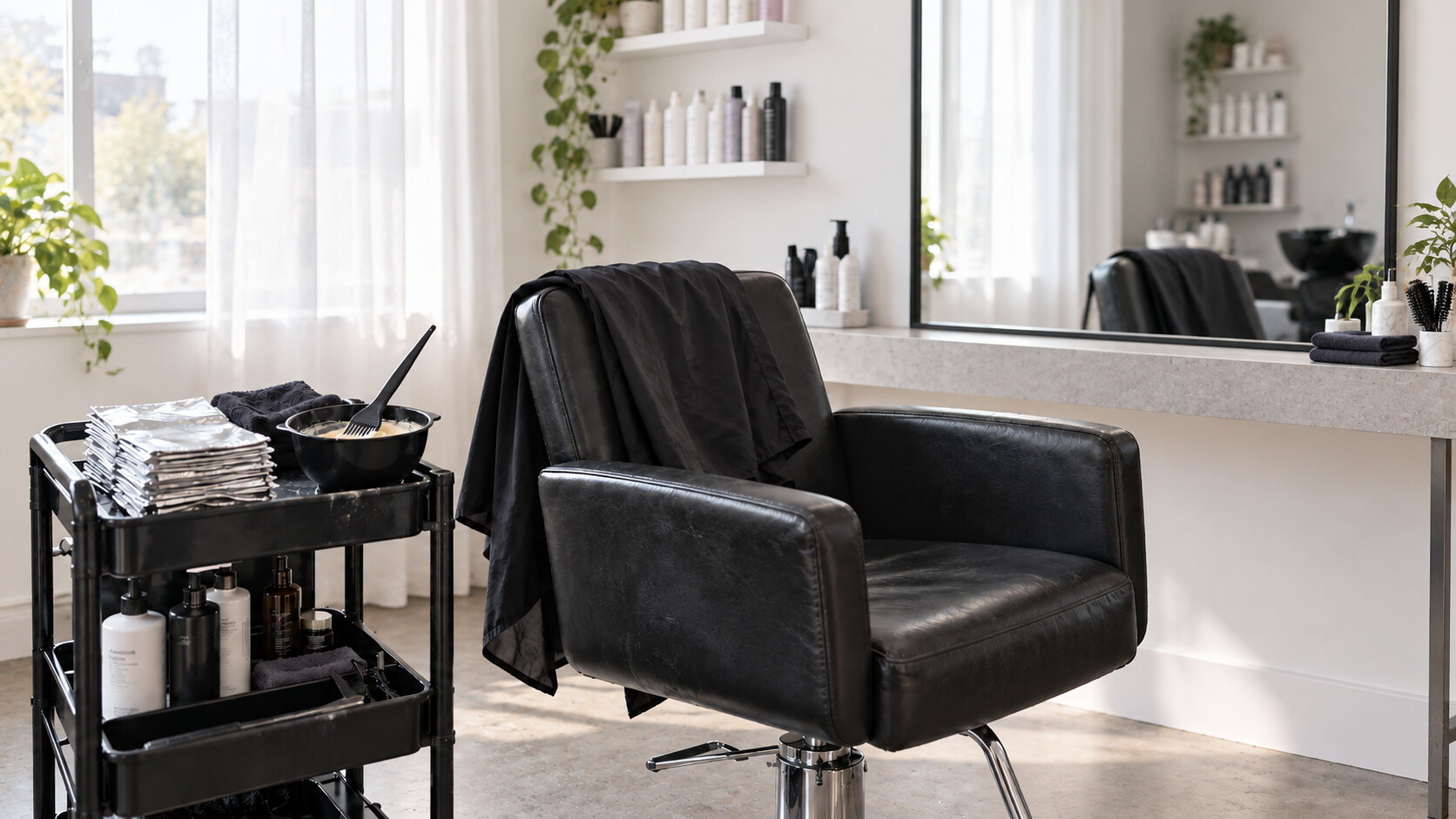
You blocked three and a half hours for a balayage. The chair sat empty. No text, no call, just a name on the calendar that never walked in. And the worst part isn’t the boredom. It’s the math you do in your head afterward, the regular you turned away to hold that window, the foils you’d already pulled, the toner you mixed. A no-show on a long service isn’t a missed booking. It’s a loss you paid for out of pocket.
Most booking apps treat a 30-minute brow wax and a 4-hour color correction like the same risk. They’re not. The longer the service, the more a ghost costs you, and the more it should cost the client instead of you. Here’s the real P&L, trade by trade, and the fix that actually changes the behavior.
Run the actual numbers on one ghosted appointment
A no-show has two costs you can add up, plus a third thing that makes them permanent.
The booked rate. This is the money everyone counts. It’s also the smallest part of the wound on a long service.
- A 3.5-hour balayage at $280. That’s your whole afternoon. You can’t fit another color in the window, and walk-in demand for a multi-hour service is basically zero.
- A 3-hour volume lash set at $180. A full set is your highest-ticket lash service. Ghost one and you’ve lost the anchor the rest of the day was built around.
- An acrylic full set at $90, 90 minutes. Shorter, but you stacked nothing else in that slot because the set needs your full hands.
- A 75-minute facial at $130. The room was yours for the hour-plus. Now it’s empty.
The supplies you can’t put back on the shelf. This is the line nobody adds up, and on a long service it’s real money.
- Color that’s been mixed is dead the second it’s mixed. Lightener, toner, developer, the foils you tore. Mix for a balayage and you’re out $15 to $40 in product whether the client shows or not.
- A facial where you’ve opened the room and broken the seal on single-use masks, ampoules, and decanted serums costs you product the moment you prep.
- Acrylic and lash supplies are more forgiving, but adhesive you’ve opened, a fresh tip in the cup, the disposables you set out for sanitation still leave you down.
The regular you turned away to hold the window. This isn’t a third number to add. It’s the reason the first two are gone for good. To hold a 3.5-hour block, you said no to a regular, maybe two. So when the booked client ghosts, there’s no one to backfill: no walk-in wants a multi-hour service last-minute, and the demand you had came earlier, when you were “full.” The slot isn’t revenue you might recover. It’s just gone.
Add it up on the balayage: $280 you didn’t earn and about $30 of color you mixed and threw out. Roughly $310 gone on a day you showed up and worked, and not a dollar of it refillable.
Barbers feel a lighter version of this. A ghosted fade is 30 minutes and almost no wasted product, and there’s usually a walk-in to fill it. The fix below still helps. It’s just not the emergency it is for a long service.
The fix that isn’t hope: a deposit plus a card on file
You can’t text your way out of this. Reminders help people who forgot. They do nothing about the person who books to hold a spot and bails when something better comes up. The only thing that changes the behavior is making a no-show cost the client instead of you.
Two pieces, and you want both:
- A deposit at booking. Money down before the slot is theirs. It filters out the casual “maybe” bookings before they ever hit your calendar, and it covers your product and your time if they vanish.
- A card on file. The deposit holds the window. The card on file covers a late cancel or a no-show beyond what the deposit takes. Together they mean a ghost pays for the chair they emptied.
ChairSlay does both, built in: a deposit at booking and a card on file, set per service. The deposit and any no-show charge run through your own Stripe or Square account and land in your bank, not a platform’s. ChairSlay takes 0% of it. The only fee is your card processor’s standard rate, around 2.9% plus 30 cents, the same rate you’d pay anywhere. And no new-client cut layered on top, the kind some booking apps charge (published as high as 30% on a first booking) even on a client you sourced yourself. More on that fee, and how to spot it on your own payout.
Set a deposit that fits the service
A flat policy across every service is the wrong move. The deposit should scale with what you stand to lose. Go strong where the window is long and the product is sunk. Go light where the risk is small, so you’re not scaring off a quick booking.
- Strong: color correction, full lash sets, acrylic full sets, facials. A deposit of about 25% to 40% of the service, or a flat amount that covers your product plus a real chunk of the time. On a $280 balayage, a $75 to $100 deposit isn’t aggressive. It’s the cost of holding half your day.
- Lighter: fills, gel manis, single-color root touch-ups. A smaller flat deposit, $20 to $30, enough to mean something without friction on a routine rebook.
- None or near-none: a brow wax, a quick lineup. A 15-minute service that’s easy to refill doesn’t need a deposit wall. Save the policy for where it earns its keep.
Here’s wording you can paste straight onto your booking page. Plain, firm, no apology:
Booking & deposit policy. A deposit is required to hold your appointment and goes toward your service total. I ask for at least 48 hours’ notice to cancel or reschedule. Inside 48 hours, the deposit is non-refundable. No-shows and same-day cancellations are charged in full to the card on file. Thanks for respecting my time. It lets me give you mine.
Set the notice window to your real one. A colorist holding 3.5-hour blocks might want 72 hours. A nail tech doing 90-minute sets might run 24. The principle holds: the bigger the block, the more notice you need to refill it.
What to say when a client pushes back
Most won’t. The ones who do are usually testing whether the policy is real. Keep it short and don’t negotiate against yourself.
- “Why do I have to pay upfront?” “The deposit holds your spot and goes toward your service. It’s how I make sure the time’s reserved for you.”
- “I’ve never had to do that before.” “It’s standard for me on longer services. A color like yours is most of my afternoon, so I hold it with a deposit.” True, calm, done.
- “I had an emergency, can you waive it?” Have a line ready so you’re not deciding on the spot: “Totally understand. With 48 hours’ notice I can always move it and your deposit comes with you. Inside that window it holds, because the chair’s already gone.” Then it’s your call: if they gave notice and you could refill, waive it and look generous. If they ghosted a 3-hour set, the policy is the policy. You’re allowed to keep the deposit. That’s what it’s for.
You set the policy once. After that it runs itself, and the right clients respect it. The ones who won’t put down $40 to hold three hours of your time were never going to show up reliably anyway.
Rebook before they leave the chair
The cheapest no-show is the one that never happens, and the surest way to prevent it is to book the next visit while they’re still in your chair, glowing at the mirror. Don’t let them leave on “I’ll text you.” Put the next appointment on the calendar before they stand up, with its deposit attached. A client who’s already paid to hold their next slot is a client who shows.
Protect the long appointments first
ChairSlay gives you the deposit and card-on-file that fit each service, paid straight to your own Stripe or Square. We take 0%, so the money’s yours from the first deposit on.
ChairSlay Pro is $39/mo, or $390/yr paid upfront. The first 100 pros to subscribe get $24/mo (or $288/yr paid upfront), for as long as they stay subscribed. See the plan at chairslay.com and protect your week before the next ghost costs you the afternoon.